
Navigating Contract Terminations: Strategies for Veteran-Owned Businesses Amidst Governmental Shifts
Overview
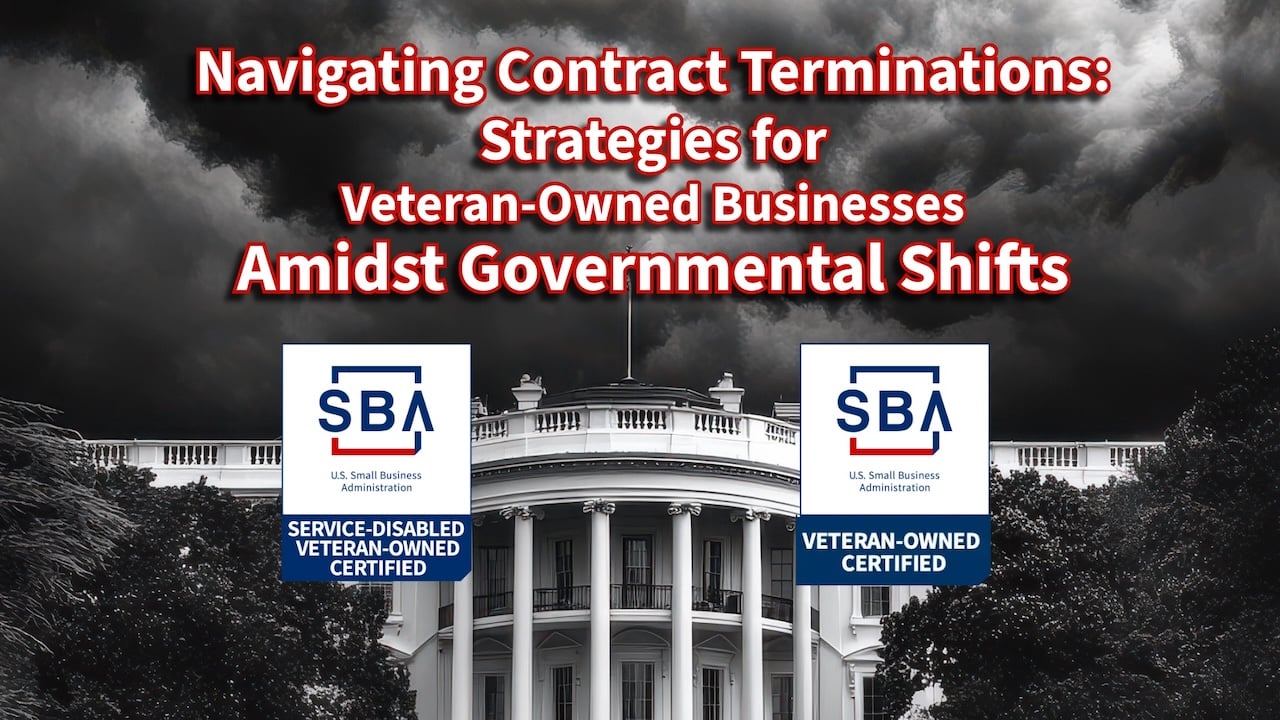
In recent months, significant policy shifts within federal agencies have led to the abrupt termination of numerous contracts, disproportionately affecting veteran-owned small businesses (VOSBs) and service-disabled veteran-owned small businesses (SDVOSBs). These developments underscore the critical need for entrepreneurs reliant on government contracts to adopt proactive strategies to ensure business continuity and resilience.
Recent Contract Terminations Impacting Veteran-Owned Businesses
The Department of Veterans Affairs (VA) has embarked on a mission to reduce expenditures by $2 billion, resulting in the cancellation of 28 contracts. Notably, 20 of these contracts were held by service-disabled veteran-owned small businesses, accounting for 89% of the claimed savings (Washington Technology, 2025). VA Secretary Doug Collins stated that these cancellations are merely the first step toward achieving the department's financial objectives, adding, "We are prioritizing efficiency and cost reductions in our procurement processes to ensure taxpayer dollars are being used effectively" (Washington Technology, 2025).
Similarly, the Department of Government Efficiency (DOGE), under the leadership of Elon Musk, has terminated approximately 1,125 contracts across various federal agencies. However, reports indicate that nearly 40% of these cancellations are expected to yield no cost savings, as many contracts had already been fully obligated (Federal News Network, 2025). This has raised concerns about the efficacy and rationale behind such widespread terminations. A DOGE spokesperson noted, "These cancellations align with our broader objective of streamlining government operations, even if the immediate financial benefits are not apparent" (Federal News Network, 2025).
The ripple effects of these actions have been profound. The National Veteran Small Business Coalition (NVSBC) expressed deep concern, highlighting the "devastating impact" of the VA's decision to terminate nearly 900 VOSB and SDVOSB professional service contracts (NVSBC, 2025). In a communication to its members, NVSBC leaders emphasized the overwhelming significance of these decisions on the veteran business community and pledged to advocate vigorously on their behalf. "We are tirelessly striving to gain a full appreciation of the breadth and depth of these actions and preparing for additional VA and Federal Agency actions that affect our members," the letter stated (NVSBC, 2025).
The Elimination of DEI Initiatives at the VA
In addition to contract terminations, the VA has ceased all activities and funding related to diversity, equity, and inclusion (DEI) programs. This move halts millions in spending previously allocated to DEI efforts, reflecting a significant policy shift within the department (VA Press Room, 2025). "We are ensuring that every taxpayer dollar is focused on direct veteran care and benefits rather than administrative programs," VA officials stated (VA Press Room, 2025). This decision has been met with mixed reactions, with some applauding the shift toward fiscal responsibility, while others express concerns about the long-term implications for veteran support initiatives.
Strategies for Business Continuity and Resilience
Given the volatile landscape of government contracting, it is imperative for veteran-owned businesses and other entrepreneurs dependent on federal contracts to implement strategies that mitigate risk and promote sustainability.
1. Diversify Revenue Streams
Relying solely on government contracts can expose businesses to significant vulnerabilities, especially during periods of policy change or budget cuts. Exploring opportunities in the private sector, commercial markets, or other government agencies can provide alternative income sources. Engaging in strategic partnerships or joint ventures can also open new avenues for revenue (OrangeSlices AI, 2025).
2. Enhance Financial Management
Effective cash flow management is crucial. Establishing a financial buffer or reserve can help businesses navigate periods of uncertainty. Regular financial audits and adopting robust accounting practices ensure that companies remain fiscally sound and prepared for unforeseen challenges. "Financial preparedness is essential in times of uncertainty. Companies should have contingency plans and alternative financial structures to mitigate unexpected disruptions," said a financial analyst from Dentons (Dentons, 2025).
3. Invest in Business Development
Expanding service offerings or entering new markets can reduce dependency on a single client base. Continuous market research and staying abreast of industry trends enable businesses to adapt and innovate, meeting the evolving needs of a diverse clientele. Government contracting expert John Martin notes, "Innovation is key. Businesses that pivot effectively are more likely to withstand abrupt changes in federal policies" (Washington Post, 2025).
4. Strengthen Client Relationships
Building strong relationships with existing clients can lead to repeat business and referrals. Providing exceptional service and maintaining open communication channels foster trust and loyalty, which are invaluable assets in times of uncertainty. "Having strong business relationships increases resilience. Companies should focus on long-term partnerships to sustain operations during times of change," said a VA procurement official (Washington Technology, 2025).
5. Stay Informed and Engaged
Active participation in industry associations, such as the NVSBC, provides access to valuable resources, networking opportunities, and advocacy platforms. Staying informed about policy changes and engaging in dialogue with policymakers can offer insights and influence decisions that impact the veteran-owned business community. "We are engaging with senior administration officials and congressional leaders to make our members' voices heard," stated NVSBC CEO Scott Jensen (NVSBC, 2025).
Navigating Contract Terminations and Seeking Remedies
In the event of contract suspensions or terminations, understanding the available remedies and processes is essential. Legal experts advise that businesses carefully review the terms of their agreements to comprehend the specific provisions related to termination and cost recovery. Maintaining detailed documentation of all incurred costs associated with the contract is vital to support claims for compensation. "Businesses should seek legal counsel to explore potential avenues for compensation and dispute resolution," a legal expert at Dentons advised (Dentons, 2025).
Conclusion
The current governmental shifts present formidable challenges for veteran-owned businesses and other entrepreneurs reliant on federal contracts. However, by adopting proactive strategies such as diversifying revenue streams, enhancing financial management, and staying informed, businesses can navigate this turbulent landscape. The resilience and adaptability of these enterprises not only ensure their survival but also contribute significantly to the broader economy.
Bibliography
Dentons. (2025, February 18). Termination Turmoil: Cost Recovery Amidst Trump/DOGE Suspension, Stop-Work and Termination of Contracts and Grants. Link to Article
Federal News Network. (2025, February 25). Nearly 40% of contracts canceled by Musk’s DOGE are expected to produce no savings. Link to Article
National Veteran Small Business Coalition. (2025, February 26). Member Communication on VA Contract Terminations.
OrangeSlices AI. (2025, February 25). #DOGE making big cuts at Veterans Affairs – Veteran-Owned firms take direct hit. Link to Article
VA Press Room. (2025, February 25). VA Ends DEI, Stops Millions in Spending on DEI Programs. Link to Article
Washington Technology. (2025, February 25). Veteran-owned small firms hit first by VA's push for $2B in contract cuts. Link to Article