

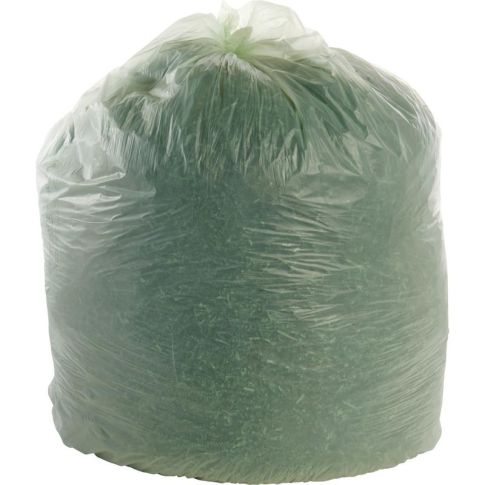
Stout EcoSafe-6400 Compostable Compost Bags, 0.85 mil, 64-Gallon, Green, Box Of 30 MPN:E4860E85
Discount: See in Cart
Free Shipping
In Stock
Free Shipping
In Stock
SKU
312-604590
Stout EcoSafe-6400 Compostable Compost Bags, 0.85 mil, 64-Gallon, Green, Box Of 30 MPN:E4860E85
Eco-conscious households and commercial composting facilities can now rely on the Stout EcoSafe-6400 Compostable Compost Bags for safe and efficient waste management. These heavy-duty bags are made with high-quality U.S.-made resins and feature a star-seal bottom for leak-resistance and easy carrying. Certified by the Biodegradable Products Institute (BPI) and conforming to ASTM D6400 standards, they can be safely composted in commercial facilities, reducing waste and creating usable organic matter. Perfect for food waste, yard trimmings, and other organic materials, these bags provide a convenient and sustainable solution for composting and reducing environmental impact.
Top product features:
- The bags are resistant to heat and moisture, allowing for safe disposal of hot items.
- The bags have a star-seal bottom that is leak-resistant and makes them easy to carry.
- The bags are designed to tear or zipper if punctured or stretched, ensuring their strength and integrity.
Top product applications:
- Food waste collection
- Composting
- Yard waste collection
The strength of the bags ensures they donT tear or zipper if punctured or stretched, and resistance to heat and moisture lets you dump hot items safely. Made with high-quality U.S.-made resins. Star-seal bottom is leak-resistant and makes the bags easy to carry. Eco-conscious choice - has one or more meaningful eco-attributes or eco-labels. BPI Certified Compostable - certified by the Biodegradable Products Institute (BPI) to be compostable in commercial compost facilities (where facilities exist). Conforms to ASTM D6400 standards. For detailed information see www.astm.org. Product Content Contains Compostable Material - made from materials that can quickly break down in commercial composting facilities (where facilities exist), to help reduce waste while creating usable organic matter.
Additional Information
- Country of Origin: US
- UNSPSC Code: 47121701
- UNSPSC Commodity: Trash bags
- Green: Yes
- Recycled Content: FALSE
- Hazardous: No
- Prop 65: No
- MSDS URL: nan
- Package Length: 13.50
- Package Width: 7.88
- Package Height: 4.00
- Package Weight: 7.05
Related ASINs: B001RUWLFE, B08CKCVMZJ
Product info last updated on January 6, 2025 12:06am UTC Category: Trash Cans and Bags