

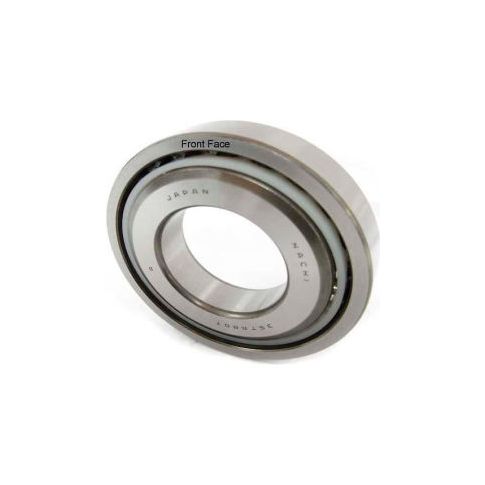
NACHI Ball Screw Support Bearing 25TAB06UP4 Single Flush Ground 25MM Bore 62MM OD 25TAB06UP4
NACHI Ball Screw Support Bearing 25TAB06UP4 Single Flush Ground 25MM Bore 62MM OD
This NACHI Ball Screw Support Bearing is designed to support high-precision ball screws in high-speed machines, offering exceptional stiffness and accuracy. Its pre-set preload eliminates complicated adjustments and torque measurement, making it ideal for applications requiring high reliability and precision. Suitable for use in DB, DF, or DT assembly, this bearing is perfect for industries such as semiconductor manufacturing, robotics, and precision machinery. Its compact size and high load rating make it an excellent choice for applications where space is limited and high performance is required, such as in CNC machines, 3D printers, and other precision equipment.
Top product features:
- These bearings are designed to support ball screws that are used as actuators of high precision and high speed machines.
- Their stiffness is much greater than conventional angular contact ball bearings.
- Flush ground bearings can be used in db (back to back), df (face to face), or dt (tandem) assembly.
Top product applications:
- High precision and high speed machines
- High precision machinery
- High speed machinery
Features ul style"margin-top0px; padding-top 5px; padding-bottom 5px;" these bearings are designed to support ball screws that are used as actuators of high precision and high speed machines their stiffness is much greater than conventional angular contact ball bearings as these have a greater number of balls these bearings are supplied with a pre-set preload to eliminate complicated adjustment and torque measurement flush ground bearings (suffix du or u) can be used in db (back to back) df (face to face) or dt (tandem) assembly note - load ratings when single flush ground bearing (suffix u) is assembled in duplex and axial load is applied to 2 rows or 3 rows load rating listed is to be multiplied by 1.62 or 2.16 respectively for dynamic and multiplied by 2 or 3 respectively for axial limiting load.
Additional Information
- UNSPSC: 31171531
- Brand: Nachi America Inc
- Package Quantity: 1
- Country of Origin: JP
- FOB Origin: IN
- Ships by: PARCEL
- Comes in a kit: No
- Newly added to catalog: No
- Item is on Clearance: No
- Contains Hazardous Materials: No
- CA Proposition 65 Applies: No
- Package Length: 6.00
- Package Width: 6.00
- Package Height: 6.00
- Package Weight: 0.53
Product info last updated on March 13, 2025 9:00am UTC
Category: Bearings